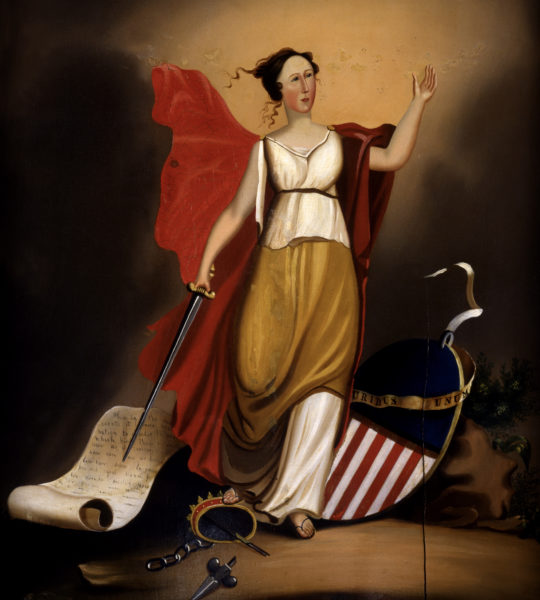

George Washington and his generals at Yorktown, Charles Willson Peale (1741-1827), c. 1784, Maryland, oil on canvas. Maryland Center for History and Culture, Gift of Robert Gilmor, Jr., 1845.3.1.
America 250 Digital Portal
Learning Resources
Learn about the Revolutionary War through multiple perspectives such as those of common soldiers, officers, families, community members, and others. Lessons include object-based learning, primary sources, and digital components. This trunk is eligible for a grant through the Society of Cincinnati.
Grades 4-8. Cost: $150 (includes shipping both ways).
Explore the Library sources for researching the American Revolution and the soldiers who fought in the war.
Travel through Maryland’s history in the 1600s and 1700s to learn about the people and forces that shaped its economy and culture.
Cost: $5 per student (This program has grant funding available. See Grant Funding page to learn more.)
Capacity: 10-60 students*
Duration: 1.5 hours
Across the United States people are coming together to commemorate the 250th anniversary of the nation’s founding in 2026. At the center of this celebration is one of the most influential primary sources in American history: the Declaration of Independence. For nearly two and a half centuries this document has structured our government and defined the truths “… that all men are created equal… with certain unalienable rights, that among these are Life, Liberty, and the pursuit of Happiness” that generations of Americans have fought to uphold.
As we reflect on the lasting impact of the Declaration, the Maryland Center for History and Culture is taking a closer look at Revolutionary War Era primary sources in our library and museum collections. To highlight these materials and encourage the public to engage with them in new ways, we’ve created this digital portal, which organizes documents and artifacts into four distinct categories: American Uprising, Military, Home Front, and Business & Industry.
What is a primary source? A primary source is an original document or object created at the time of an event by someone who witnessed or experienced it firsthand. These materials—diaries, newspapers, photographs, legal documents, letters, objects, and more—offer direct windows into the past.
Our goal is to invite visitors to explore, question, and engage with Revolutionary War Era primary sources in new ways. By closely examining the words, objects, and images preserved from this period, we can gain a better understanding of the complex story of the nation’s founding and the many different people who lived through it.
Related
Virtual Field Trips: K-12
Maryland and the American Revolution at 250: Call for Papers

American Uprising
Tensions between the North American colonies and Great Britain dramatically increased during the years leading up to the Revolution. Colonists fought back against strict British rule through protests, boycotts, and other acts of resistance. By 1776, the Declaration of Independence clearly outlined their grievances and goals, serving as a constant reminder of what they were fighting for. At the same time, many people, including African Americans, Indigenous Peoples, women, and other marginalized groups, continued to live under systems that denied them basic rights. The road to revolution was complex, involving people from diverse backgrounds who experienced varying degrees of freedom.
Featured Items: American Uprising

Excerpt from Correct copies of the two protests against the bill to repeal the American Stamp Act, of last session. With lists of the speakers and voters
Great Britain. Parliament. House of Lords (1766)
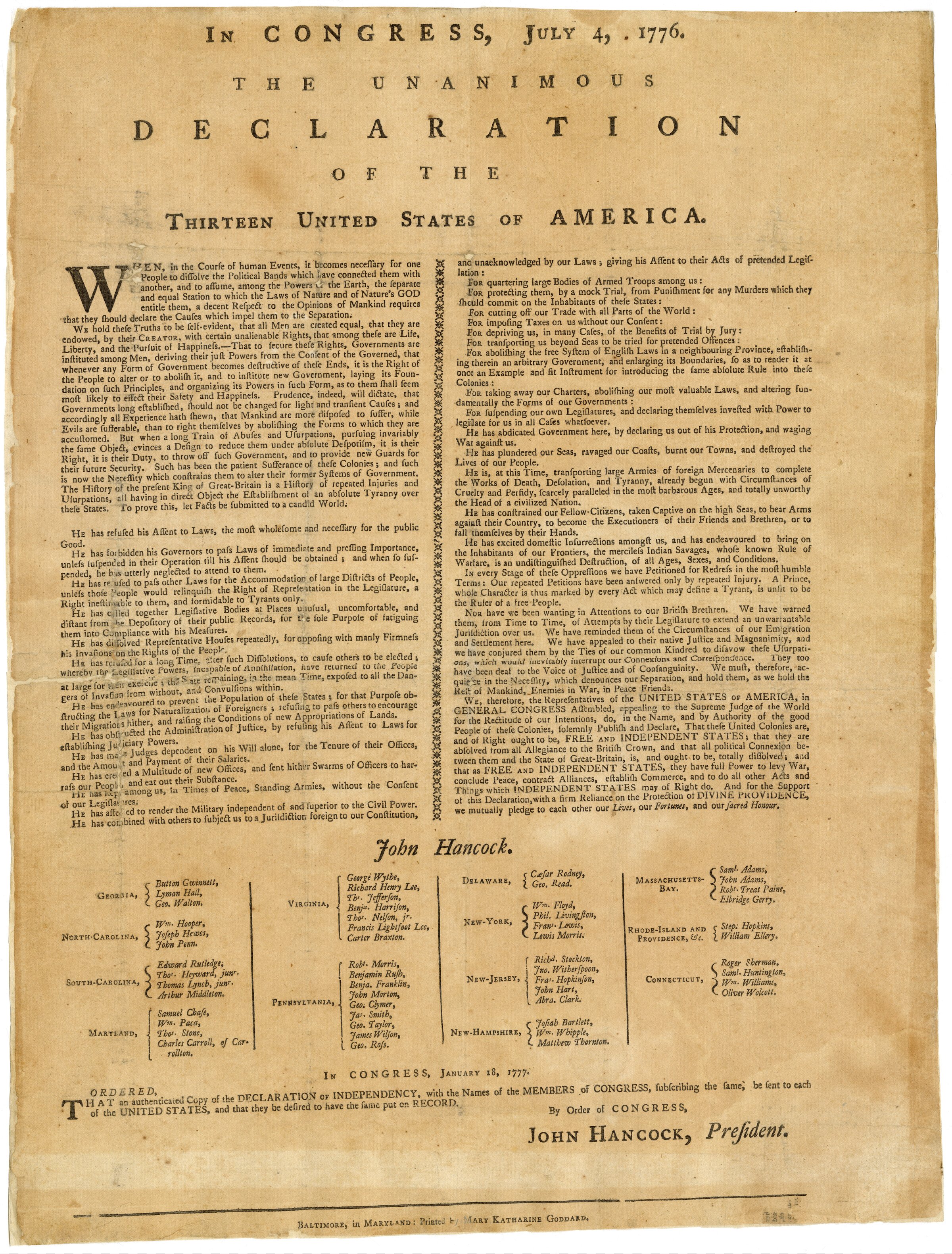
In Congress, July 4, 1776. The unanimous declaration of the thirteen United States of America
United States. Continental Congress (1777)

Articles of incorporation for the Baltimore Independent Cadets
Mordecai Gist (1774-12-03)

“A Prince whose character is thus marked by every act which may define a Tyrant, is unfit to be the ruler of a free people…”

Military
Many of the soldiers fighting for independence were ordinary people who left behind families, livelihoods, and stability to join a cause they believed in. Early American forces were a patchwork of militia units, informal meeting places, and citizens learning to fight as they went. Figures like Mordecai Gist, who set aside his work as a Baltimore merchant to become a respected officer, embody this grassroots spirit. Soldiers’ experiences and the documents they left behind remind us that the Revolution’s strength grew not just from military strategy but from personal conviction and resilience.
Featured Items: Military

Proceedings of a Brigade Court Martial
Joseph Burgess (1778-10-24)

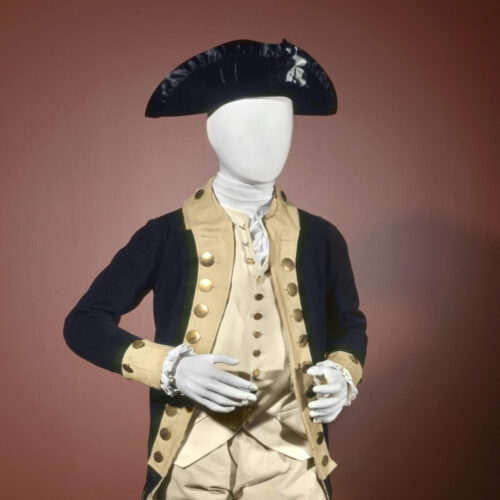
Uniform; Waistcoat
unknown (circa 1779-1781; circa 1973)

Letter from Mordecai Gist to George Washington
Mordecai Gist (1781-09-04)

Commodore Joshua Barney
Juan Bauzil (circa 1796)

Letter from Richard Dallam to Mordecai Gist
Richard Dallam (1781-05-07)
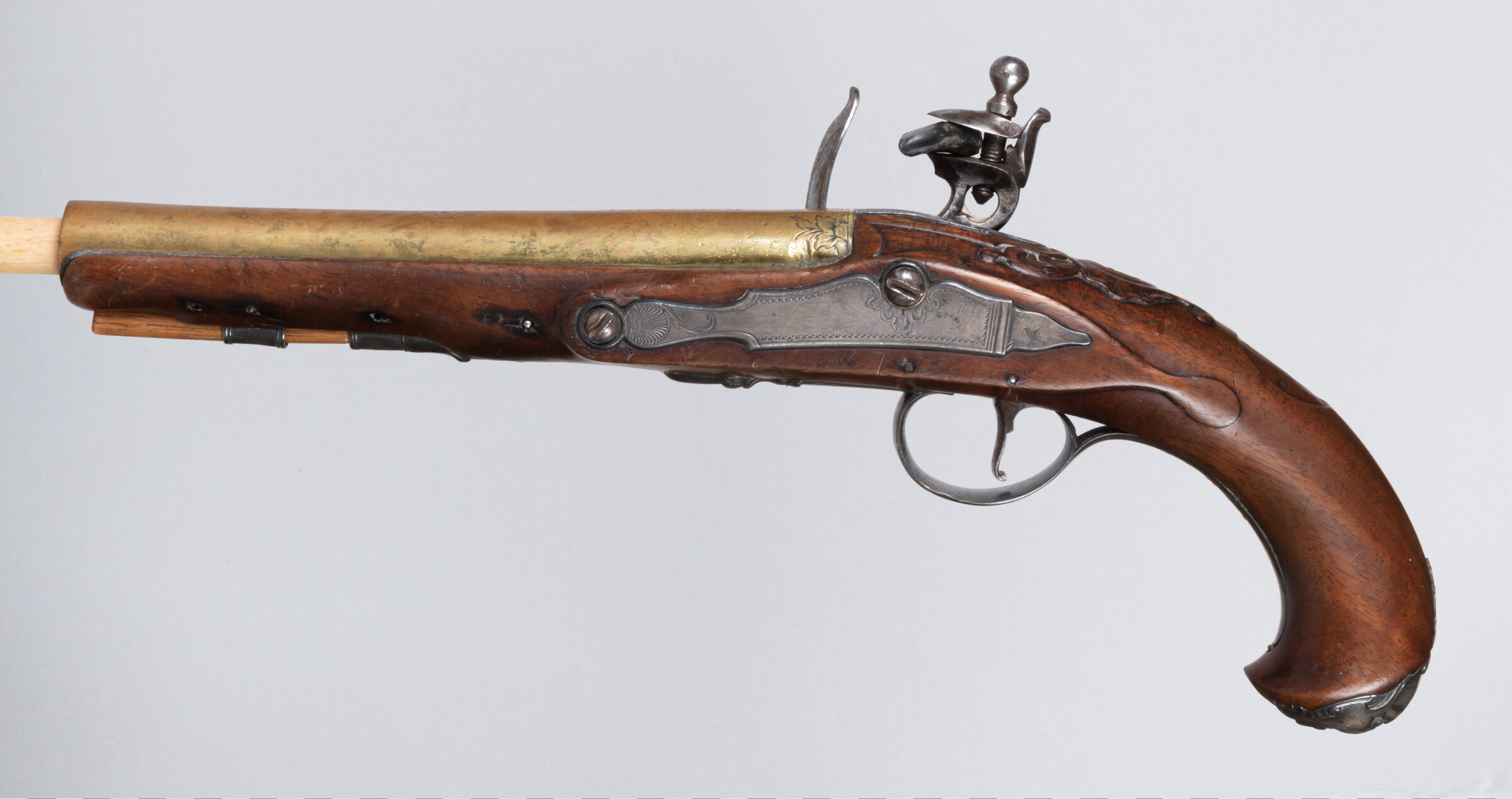
Pistol
1759-1783 Rappahannock Forge (1750-1810)

Banner
unknown (1778)

George Washington at Dorchester Heights
Jane Stuart (ca. 1830)

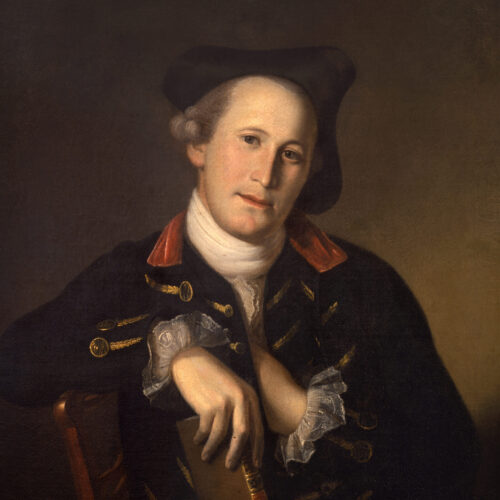
“But when a long train of abuses and usurpations, pursuing invariably the same Object evinces a design to reduce them under absolute Despotism, it is their right, it is their duty, to throw off such Government, and to provide new Guards for their future security.”

Home Front
The impact of the American Revolution reached far beyond the battlefield. Women, children, business owners, enslaved people, and Indigenous communities, experienced the conflict in ways that significantly reshaped their daily lives. Primary sources, from letters describing British raids on local farms to portraits of families forced to flee their homes, reveal how deeply the war disrupted domestic life. These materials help us explore what ordinary people endured, supported, and hoped for during a time of profound upheaval
Everyone fighting this conflict was someone’s child, brother, father, or husband. The conflict had lasting impacts on every family, patriot or loyalist, and no one was exempt from the fear and violence of war.
Below is a portrait miniature of Anna Frisby Rousby Fitzhugh (1727-1793), who was born in Cecil County, Maryland. Anna first married John Rousby (1728-1750). He left her widowed with one child and in possession of Rousby Hall, an estate at the mouth of the Patuxent River in Lusby, Maryland. In 1752, she married Virginia lawyer, William Fitzhugh (1722-1798), a friend of George Washington and Thomas Sim Lee. Fitzhugh moved to Rousby Hall that same year and was soon involved in politics. William served in the British army during the French & Indian War, rising to the rank of colonel. He served in numerous political positions in Maryland. For resigning from the British Army in 1776, British soldiers later targeted the Rousby Hall estate and twice burned and looted their property of possessions and slaves (1780 and 1781). William, Anna, and their three children were driven from their home on both occasions.
The couple’s son, William Fitzhugh, enlisted and was set to march with Mordecai Gist’s southern army commanded by General Nathael Greene. The elder William Fitzhugh writes a friendly letter, linked below, to Gist asking him for “a continuance of that friendly attention, with which you have been so kind to honor Him—” and goes on to explain that if the young man’s skill in any way matches his enthusiasm for the cause, he should make a good soldier.
Featured Items: Home Front

Anna Frisby Rousby Fitzhugh
unknown (circa 1800)

Letter from William Fitzhugh to Mordecai Gist
William Fitzhugh (1781-08-20)

A Map of Maryland
Sarah Falconar (1798)

Letter from Uriah Forrest to Mordecai Gist
Uriah Forrest (1781-03-26)

Letter from William Pierce to Mordecai Gist
William Pierce (1782-08-23)
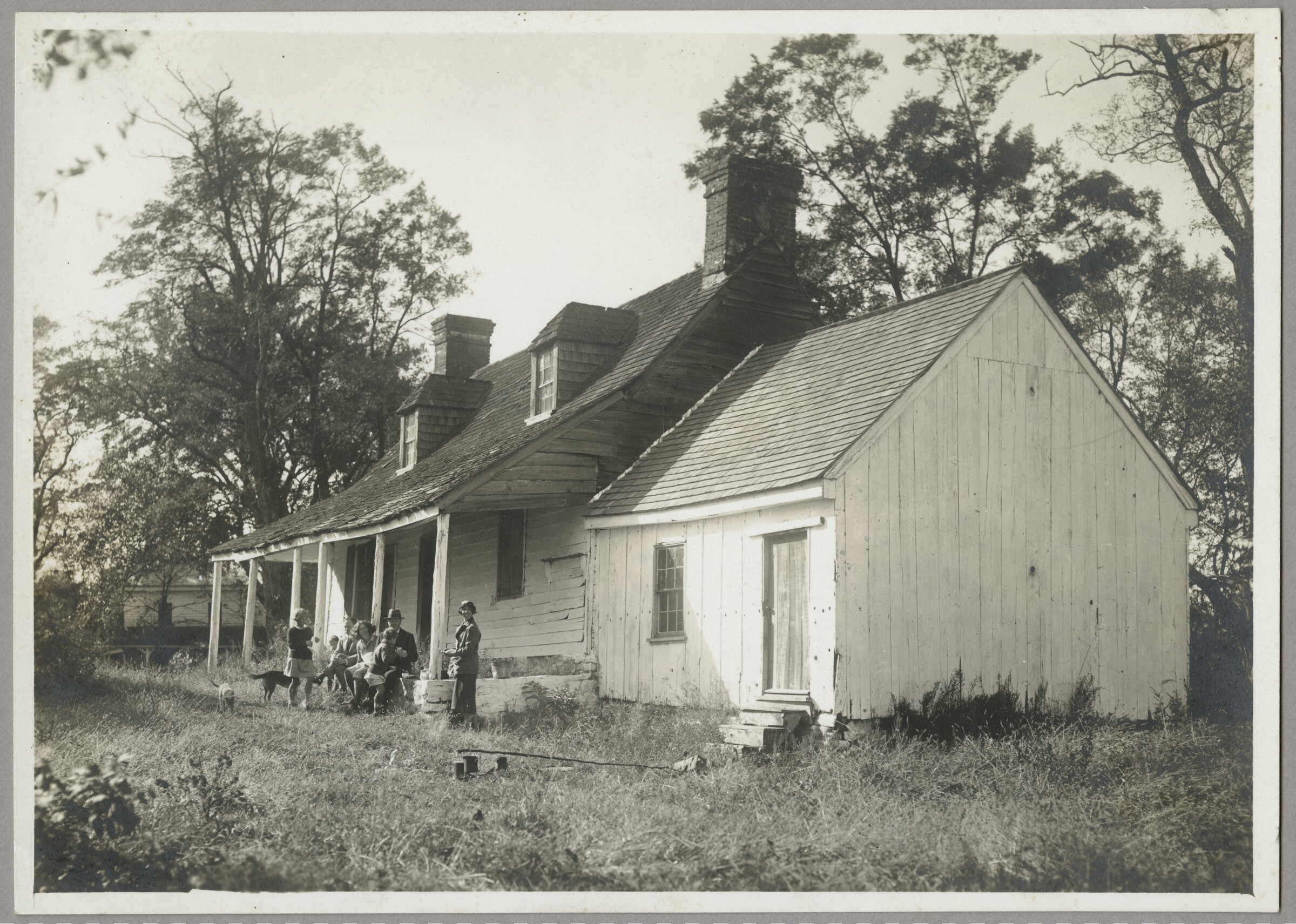
Yeates house
unknown (circa 1925)
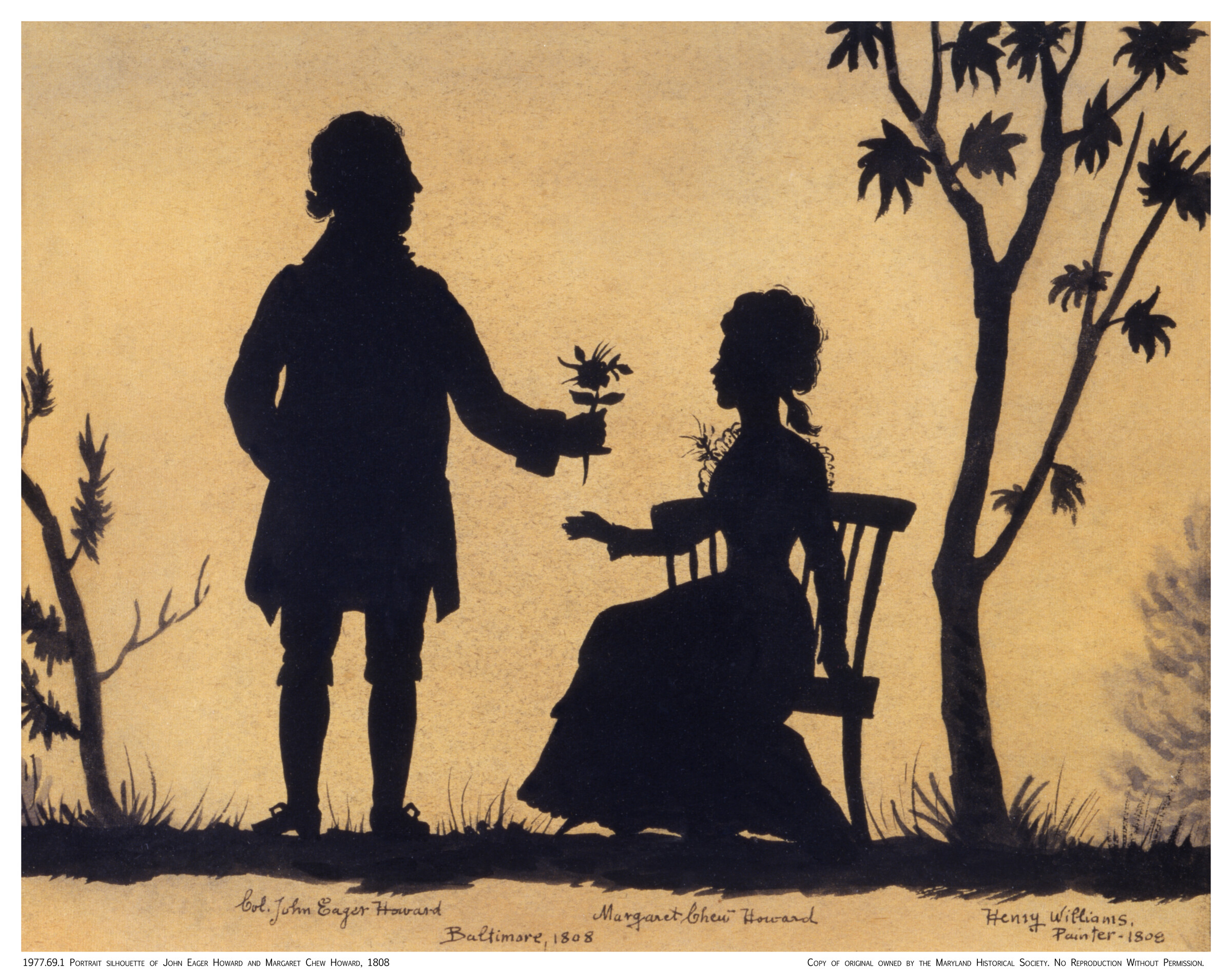
Colonel John Eager Howard and Margaret Chew Howard
Henry Williams (1808)

Business & Industry
The fight for independence relied on more than just military power. The people and industries that provided the troops with supplies, food, and shelter played a critical role. Agriculture workers produced raw materials and foodstuffs for the Continental Army, and textile mills and iron foundries provided them with provisions and munitions. Many of the laborers who worked to sustain the colonies and bolster the revolutionary cause were enslaved. Primary sources such as sketches, maps, and bills of sale show how Maryland’s industrial communities and people of all backgrounds helped fuel the Revolution from behind the scenes.
Enslaved laborers at Maryland’s ironworks, including Warwick, Principio, and Nottingham, produced the pig iron that would be transformed into weapons, tools, and other essentials for the Continental Army. Latrobe’s depiction of Warwick Furnace captures not only an industrial powerhouse but the everyday laborers whose work sustained the war effort. A 1770 bill of sale for Charlotte, an enslaved woman “about twenty-three years of age,” reveals that she was purchased by Legh Master, an owner and operator of an iron furnace in Westminster. Charlotte represents a group of people, such as enslaved laborers, more specifically enslaved women, who are often excluded from the revolutionary historical narrative.
Featured Items: Business & Industry

Bill of sale for Charlotte, an enslaved person
Richard Breakill (1770-08-28)

Pig Iron
Nottingham Company (1753)

Warwick Iron Furnace, Chester County, PA
Benjamin Henry Latrobe (1803-05-06)
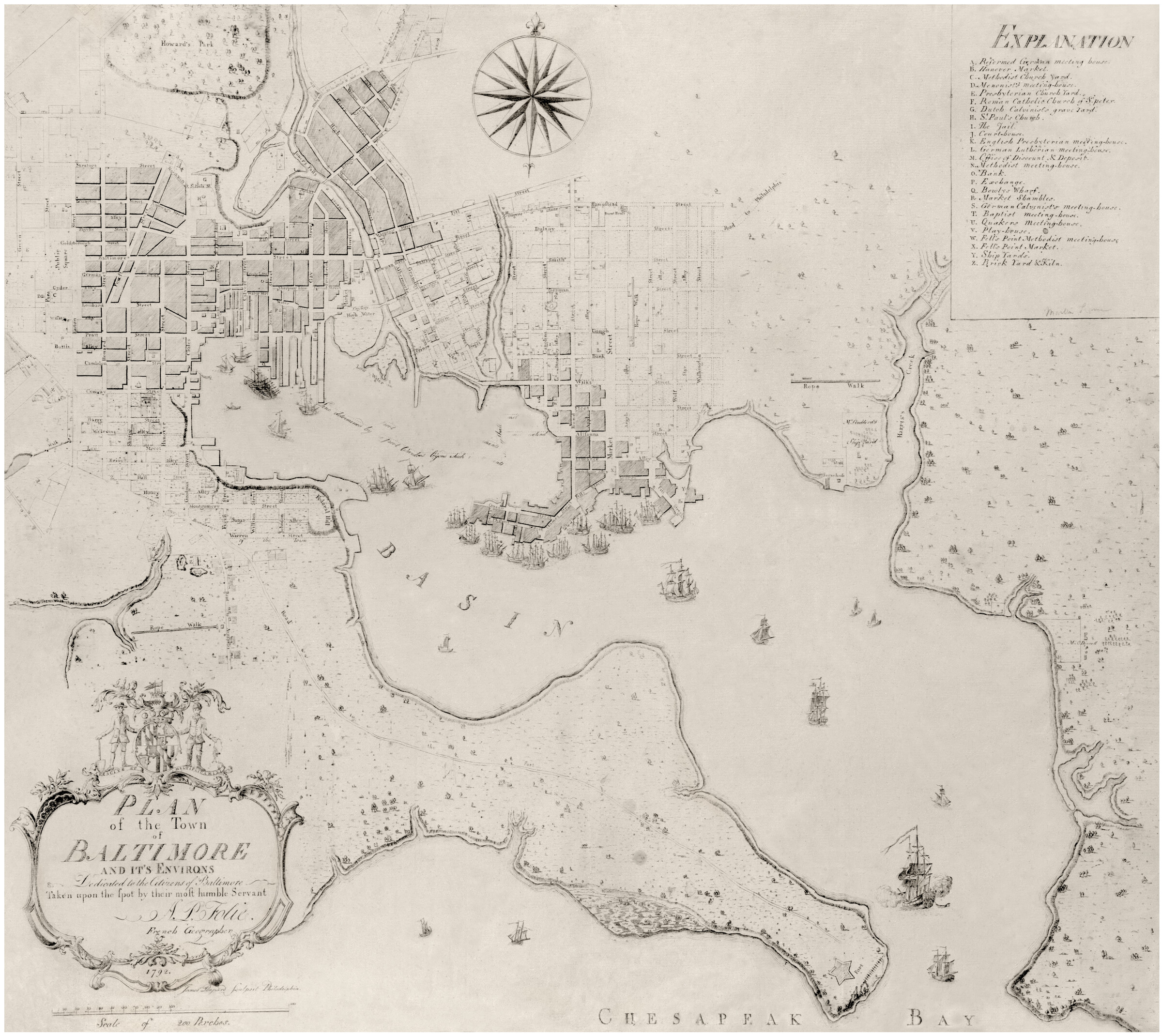
Plan of the town of Baltimore and its environs
A. P. Folie (1792)
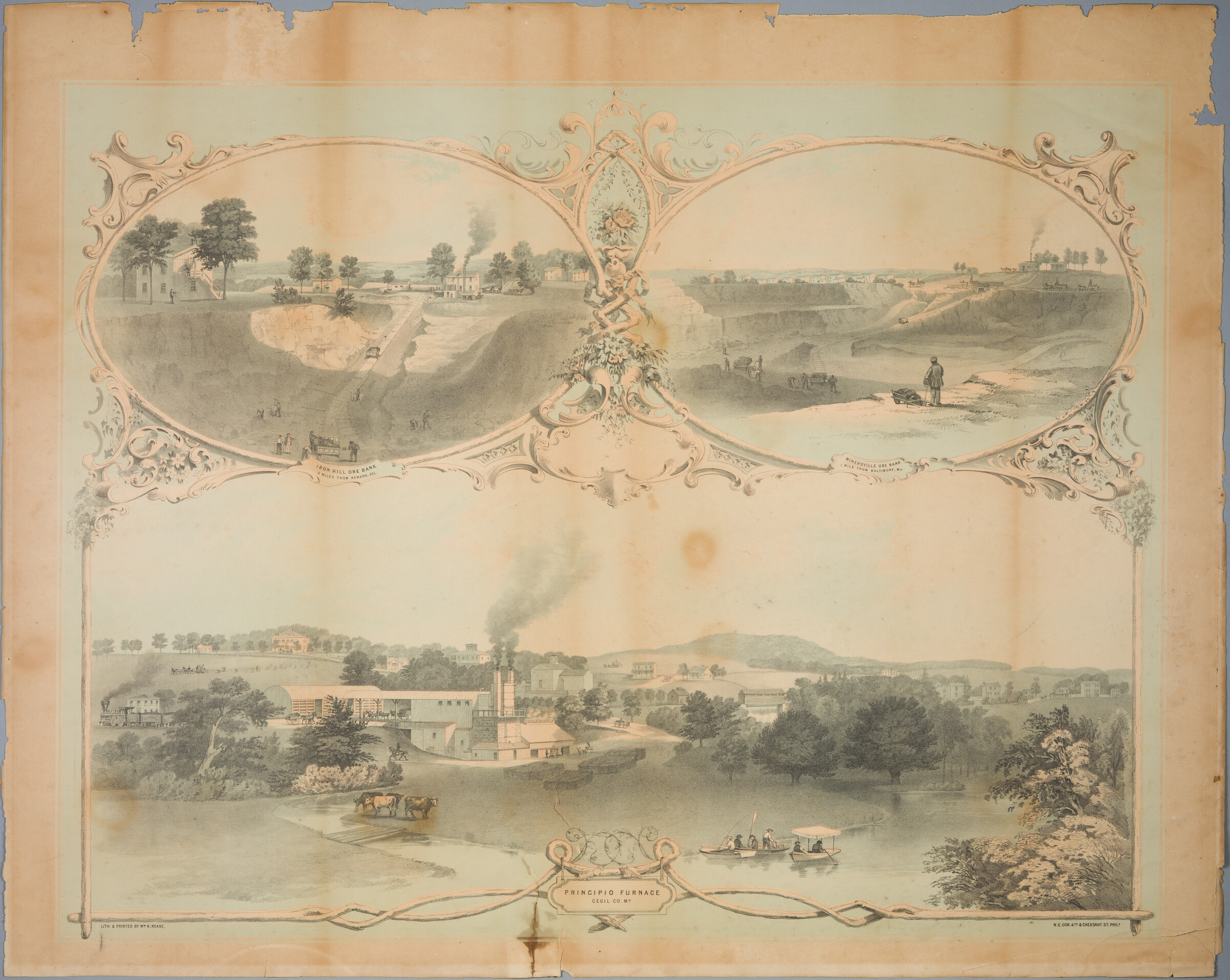
Principio Furnace, Cecil County, Maryland
W. H. Rease (circa 1860)
More Resources to Explore
This collection contains the correspondence of Brigadier General Mordecai Gist during the American Revolution. Topics include military affairs and the Maryland Line, accounts and returns (1779-83), and Gist family records, 1772-1813.
Artificial collection of military documents of the American Revolution, primarily troop rolls and accounts for pay and provisions, 1776-1824.
This collection (1781-1839) contains the papers of Otho Holland Williams (1749-1794), a Revolutionary War general and Collector of the port of Baltimore, as well as those of his sons, especially of William E. Williams. Letters relate to such subjects as eyewitness accounts of Revolutionary War battles; the setting up of the Society of the Cincinnati; the attitude of young men to George Washington; the beginnings of the federal government and the attendant politics; life in Baltimore and Western Maryland; and the treatment of disease at the end of the 18th century.
This project is generously funded by

Related
Virtual Field Trips: K-12
Maryland and the American Revolution at 250: Call for Papers
Learning Resources
Learn about the Revolutionary War through multiple perspectives such as those of common soldiers, officers, families, community members, and others. Lessons include object-based learning, primary sources, and digital components. This trunk is eligible for a grant through the Society of Cincinnati.
Grades 4-8. Cost: $150 (includes shipping both ways).
Explore the Library sources for researching the American Revolution and the soldiers who fought in the war.
Travel through Maryland’s history in the 1600s and 1700s to learn about the people and forces that shaped its economy and culture.
Cost: $5 per student (This program has grant funding available. See Grant Funding page to learn more.)
Capacity: 10-60 students*
Duration: 1.5 hours